
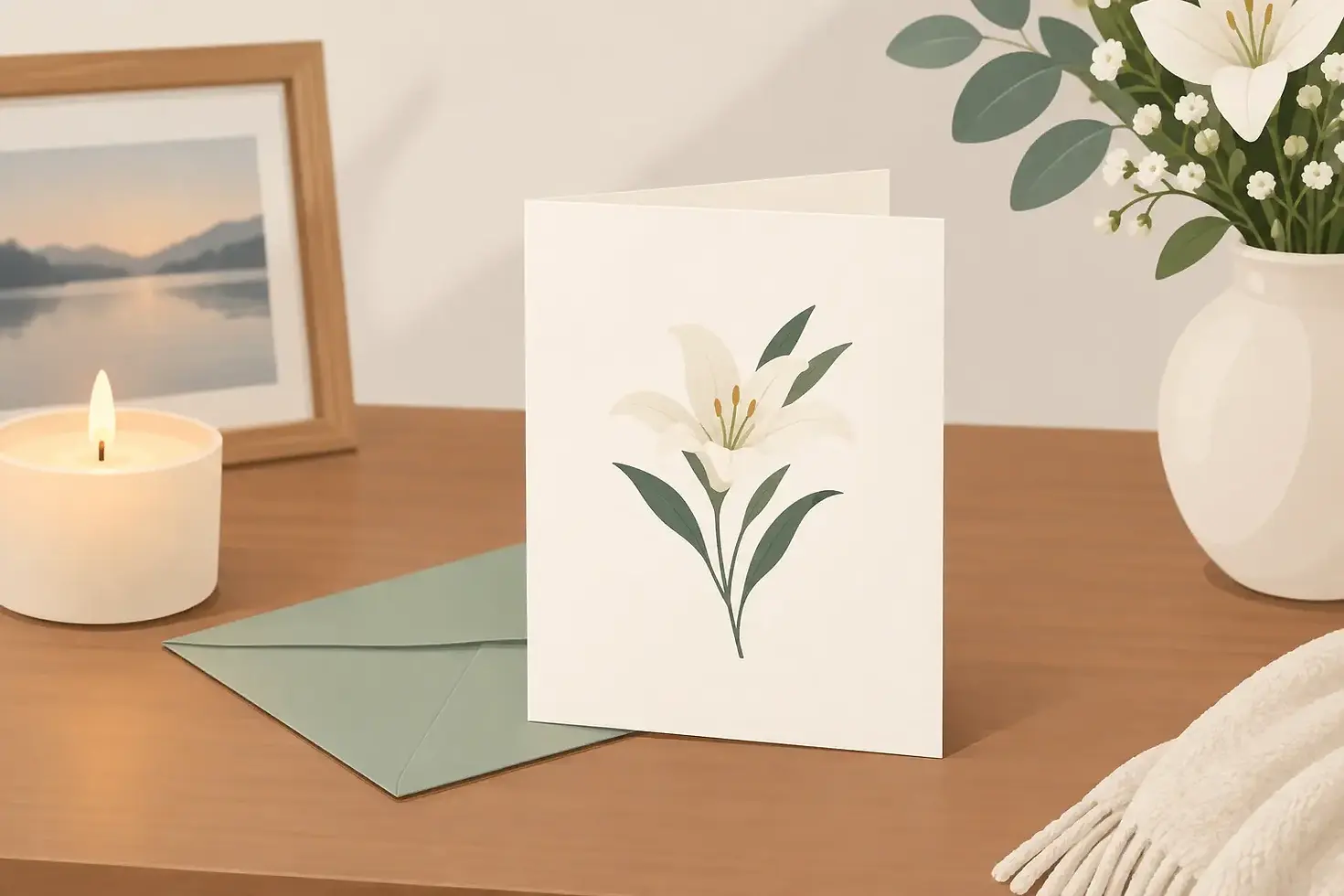
Condolence Keepsake Cards That Feel Personal

A sympathy card may arrive in the first rush of calls, flowers, and casseroles. A truly personal condolence keepsake card can remain long after those first difficult days, giving someone a small, physical reminder that their loved one mattered and that they are not grieving alone.
When words feel inadequate, the right card does not need to solve grief or explain loss. It simply needs to feel sincere. A familiar photo, a favorite saying, a memory that makes the family smile, or a message written in your own voice can turn a card into something they keep close.
What Makes Condolence Keepsake Cards Different?
Traditional sympathy cards have a meaningful place. Their quiet designs and thoughtful messages can offer immediate comfort when you need to reach out quickly. But a store-bought card cannot always speak to the specific person who was lost, the relationship they had with their family, or the memory you want to honor.
Condolence keepsake cards are made to hold those details. Instead of relying on a general sentiment, they can include a photo of a beloved parent, a treasured pet, a favorite vacation spot, a handwritten phrase, or colors that feel connected to the person being remembered. The card becomes more than a kind gesture. It becomes a tangible piece of remembrance.
That distinction matters because grief is personal. A family mourning a grandfather who told unforgettable jokes may appreciate a warm memory that brings a gentle laugh. Someone grieving a dog may find comfort in seeing the photo that captured their pet's happy, unmistakable personality. For another family, a simple image and a few quiet words may feel most appropriate.
There is no single right way to create a condolence card. The best choice depends on the relationship, the timing, and what would feel loving rather than overwhelming.
Start With One Meaningful Detail
You do not need to capture an entire life in one card. In fact, trying to do too much can make the message feel crowded or distant. Begin with one detail that immediately brings the person or pet to mind.
It might be a photograph from a birthday gathering, a snapshot of a cherished animal in the sunshine, a beloved nickname, or a phrase they always said. It might be a small story: how they welcomed everyone into their home, how they never missed a game, or how their cat always claimed the warmest chair in the room.
Specific memories often mean more than broad statements. “I will always remember how your dad made every holiday feel special” carries more warmth than a formal message copied from a card aisle. It tells the recipient that their loved one made a real impression and will continue to be remembered.
If you are unsure what to say, keep your message honest and uncomplicated. You might write that you are thinking of them, that you are available, or that you are grateful for a memory you shared. Avoid putting pressure on them to respond, be strong, or find a positive meaning in their loss. Presence is enough.
Choose a Design That Supports the Feeling
A keepsake card does not have to look somber to be respectful. Soft florals, a peaceful landscape, a favorite color, a meaningful photo, or a simple clean layout can all work beautifully. The goal is not to make grief look pretty. The goal is to create a card that feels like it belongs to the person being honored.
For a loss that happened recently, a calm and uncluttered design may be the gentlest choice. A single photo paired with a short message leaves room for the recipient's own feelings. For a memorial gathering, celebration of life, or later anniversary of a passing, a more detailed card can hold a fuller tribute, including dates, a favorite quote, or a shared family image.
Pet loss deserves the same care. Pets are family, and a card that recognizes a beloved companion by name can be deeply comforting. A favorite photo, paw-print detail, or a message about the joy that pet brought into the home can honor a bond that was real and lasting.
The design should also reflect your relationship. A close family member may welcome a card filled with intimate memories. A coworker, neighbor, or client may appreciate a thoughtful but simpler expression of sympathy. Personal does not always mean highly detailed. It means considered.
Share Your Vision, Even If It Is Only a Few Words
Many people hesitate to order a custom card because they think they need to know how to design it. You do not. The starting point can be as simple as: “I want to use this photo of her laughing,” or “He loved bluebirds and always wore a red cap.”
That is where a hands-on creative process makes a difference. Share the photo, memory, wording, and feeling you want the card to carry. Then let the details be shaped into a polished keepsake without the stress of sorting through templates or trying to arrange every element yourself.
At Gift Card Starz, each card is made from your ideas, so the finished piece can reflect what a generic sympathy card cannot. You bring the memory. The card is designed and mailed for you.
A few helpful details to share include the recipient's name, the name of the person or pet being remembered, any photo you would like included, and the message you want inside. If you have no exact wording, describe the feeling instead. “Comforting, not too formal” is useful direction. So is “We want it to feel like Mom's garden.”
Consider the Small Extras Carefully
A thoughtful card is often enough. Sometimes, though, a small added gesture can offer practical comfort or a little lift during a hard week. This is especially true when the recipient lives far away or when you cannot show up in person.
A gift card for groceries, coffee, a meal, or another everyday need can be kind because grief can make routine tasks feel heavier. A personalized Caring Coupon can offer something more personal, such as a home-cooked dinner, help with errands, dog walking, or an open invitation to talk. The key is to offer something you can genuinely follow through on.
Not every condolence card needs an extra. If the family has received many gifts or prefers privacy, a heartfelt keepsake card may be the better choice. Let the recipient's situation guide you. Thoughtfulness is not measured by how much you add.
Timing Matters, But It Is Never Too Late to Care
Sending a card soon after a loss tells someone they are on your mind during the first wave of grief. Still, do not let fear of being late stop you from reaching out. A condolence keepsake card sent weeks or months later can be especially meaningful, when the early support has quieted and the person may feel more alone.
Birthdays, holidays, anniversaries, Mother's Day, Father's Day, and the first change of season without someone can all bring grief to the surface. A card at those moments says, “I remember too.” That recognition can be a powerful comfort.
If you are sending cards on behalf of a workplace, real estate office, veterinary practice, or other business, personalization is especially important. Keep the message warm and professional, but avoid language that sounds automated. A client's loss is not a marketing opportunity. A sincere card can build trust because it shows care without asking for anything in return.
Let the Card Be a Gentle Place to Land
The most meaningful condolence keepsake cards do not try to find perfect words for an impossible moment. They make room for memory. They acknowledge love. They offer a quiet reminder that someone saw the person who was lost and sees the person who is grieving.
Choose the photo, phrase, or small detail that feels true, and let that be enough. A card made with care may sit on a mantel, tuck into a memory box, or be reread on a day when comfort is needed most.


Comments