

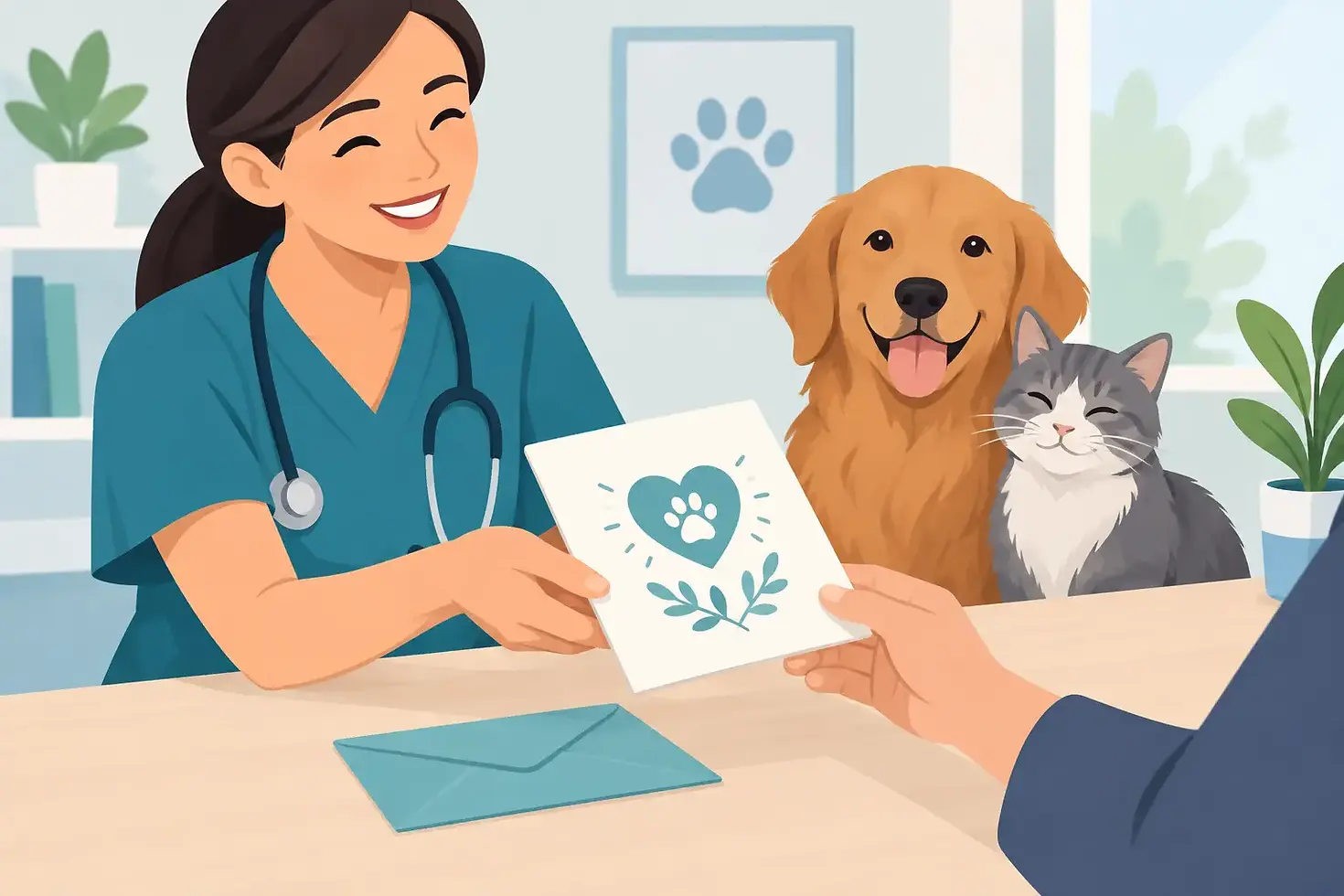
Veterinary Client Thank You Cards That Build Trust

A client may forget the exact brand of flea prevention discussed during an appointment, but they will remember how your practice made them feel when they were worried about their dog, excited about a new kitten, or grieving a longtime companion. Veterinary client thank you cards create a small, lasting reminder that their pet is more than a chart number to your team.
For a veterinary practice, a card is not about forcing a marketing moment. It is about recognizing the trust involved when someone places a beloved animal in your care. The most effective cards feel specific, timely, and genuinely human - the kind a client displays on the refrigerator or tucks into a keepsake box.
Why Veterinary Client Thank You Cards Matter
Veterinary care is personal by nature. Clients make decisions while balancing love, finances, uncertainty, and their pet's comfort. A thoughtful thank-you card acknowledges that relationship after a first visit, a difficult procedure, a referral, or years of loyalty.
That attention can strengthen retention, but the card should never read like a retention tactic. When the note focuses on the pet and the client's trust, it helps a practice stand apart from the rushed, transactional feeling people sometimes expect from healthcare. A beautiful physical card also stays in the home far longer than an automated email.
Personalization is what makes the gesture work. A generic message that could be sent to anyone may be polite, but it rarely creates an emotional response. Including the pet's name, a small reference to their personality, or a detail from the visit shows that someone was paying attention.
Choose the Right Moment to Send a Card
There is no single best occasion for every veterinary client. The right timing depends on the relationship and what happened during the visit. A new puppy's first exam calls for a bright welcome. A client who approved complex treatment deserves a warmer, more personal note of appreciation.
These are four moments when a card can feel especially meaningful:
After a first visit: Welcome new clients and their pets while the experience is still fresh. A note can reinforce that they made a good choice in trusting your team.
Following surgery or ongoing treatment: Thank clients for their care, patience, and follow-through. Keep the message supportive and avoid sounding celebratory before recovery is complete.
After a referral or positive review: Acknowledge the confidence they showed by recommending your practice. Be direct and sincere rather than turning the card into a request for more referrals.
At a pet milestone: Adoption anniversaries, puppy or kitten wellness milestones, and long-term client anniversaries give your practice a reason to celebrate the bond clients have with their animals.
There is also a time not to send a standard thank-you. After euthanasia or the loss of a pet, a sympathy card is the more compassionate choice. Even if you are grateful for the family's trust, gratitude should sit quietly within a message of comfort, not become the main point.
What to Write in a Veterinary Thank-You Card
Start with a simple expression of appreciation, then make it personal. The best messages use the pet's name and sound like they came from the people the client met, not a mailing system.
For a new client, you might write: “Thank you for choosing us to care for Luna. We loved meeting her, and we are so happy to be part of her healthy start.” This is short, welcoming, and centered on the pet.
After a procedure, a message could say: “Thank you for trusting our team with Max's care. We know surgery days can feel long, and we appreciate how closely you are following his recovery plan. We are cheering him on.” The wording recognizes the client's emotional investment without making promises about an outcome.
For a referral, try: “Thank you for telling your friends about our practice. Your trust means so much to our team, and we are grateful to care for Bailey.” If the client has been with you for years, a note from the veterinarian or technician who knows the pet best adds even more warmth.
Keep clinical details limited. A card may pass through the hands of family members, sit on a counter, or be shared online. It is wiser to avoid diagnoses, cost details, and sensitive treatment information. You can be personal without including private medical facts.
Make the Design Feel Like Your Practice
The design should carry the same care as the message. A card featuring generic paw prints can work for a broad mailing, but a truly memorable piece can reflect what clients recognize about your practice: your colors, your local community, your team culture, or the joyful quirks of the animals you see every day.
For a first-pet welcome, consider a cheerful illustration and space for the pet's name. For a loyal-client thank-you, a refined design with a photo from the practice, a hand-drawn pet portrait, or a warm note from the team may feel more appropriate. A lighthearted card can be wonderful for a playful puppy, while a more understated design fits serious treatment and recovery.
That is the trade-off with personalization: it takes more thought than ordering a stack of identical cards, but it gives clients a reason to keep the card. It also does not have to create extra work for a busy front desk. The goal is a repeatable approach with enough room for a real human detail.
A Simple Process for Busy Veterinary Teams
Start by deciding which moments deserve a card and who will trigger the order. Some practices begin with new clients and referrals because those events are easy to track. Others focus on post-surgery follow-up or long-term clients. Begin with one or two occasions, see what feels manageable, and expand from there.
Next, create a few message directions instead of one fixed script. One can be bright and welcoming, another calm and supportive, and another grateful for referrals. Staff can then add the pet's name and a short personal sentence without staring at a blank card every time.
Finally, make fulfillment easy. Gift Card Starz can turn your practice's idea, message, and pet-centered details into a one-of-a-kind physical card, then handle the design and mailing. You share your vision, choose thoughtful extras if they fit the occasion, and let the finished card do what a template often cannot: feel made for the recipient.
For larger client lists, consistency matters. Use a clear approval process so names, addresses, and messages are checked before mailing. Keep a simple record of cards sent, too. That prevents duplicate outreach and helps your team notice important relationship moments throughout the year.
Small Details Clients Notice
A card should arrive soon enough to connect with the experience. For a new-client thank-you, sending it within a week is usually ideal. For surgery, wait until the immediate recovery period has passed unless the card is paired with a recovery check-in. A referral thank-you can be sent as soon as your team learns about it.
Signatures matter. Printed names are practical for a larger practice, but one handwritten sentence or signature can change the entire feel of the piece. A veterinary technician might add, “Please give Charlie a gentle scratch from me,” when that is authentic. Avoid overdoing it or inventing familiarity that was not built during the visit.
Extras should be useful, not clutter. A personalized caring coupon for a future service, a small pet-themed magnet, or a cheerful bit of confetti may suit a welcome or milestone card. For sensitive moments, restraint is kinder. Let the card's message carry the emotion.
A veterinary client thank-you card is a tangible way to say, “We saw how much this pet means to you, and we are grateful you let us help.” When that message is personal and thoughtfully timed, it can keep shining long after the appointment is over.


Comments